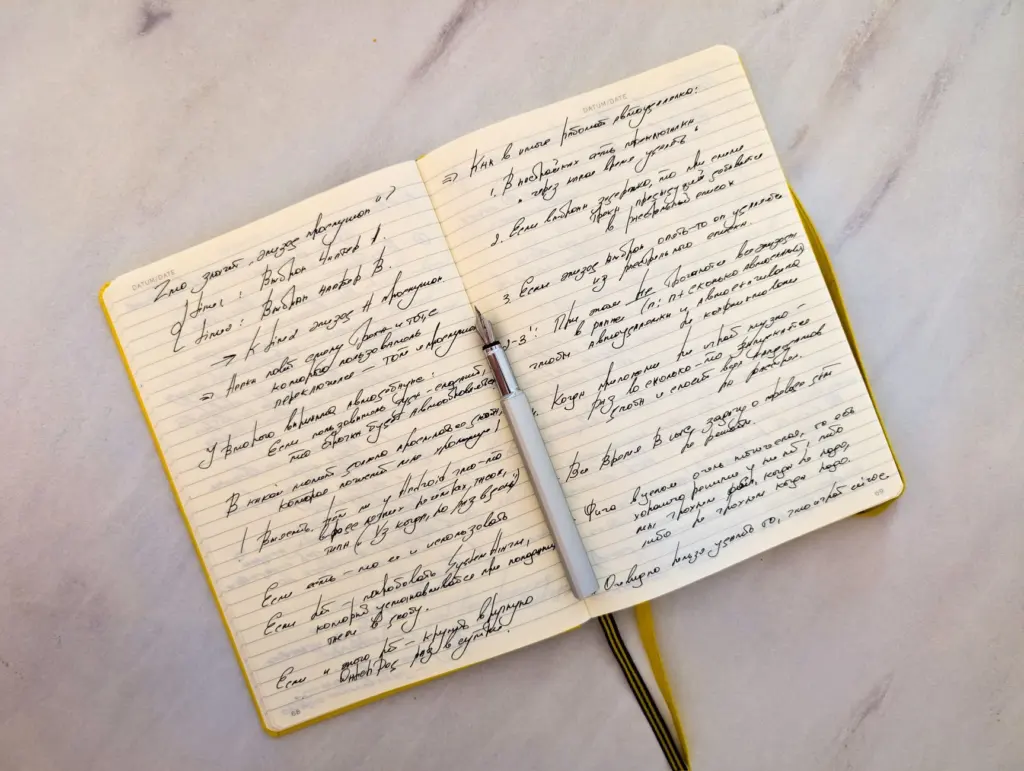
A reader buys a handsome notebook, writes a long first entry and never opens it again. Reading journal ideas work better when entries stay small: a few fields per book and a prompt answered soon after finishing.
If the notebook is one part of a bigger routine, start with how to read more books and let the journal support that routine rather than replace it.
Myths about setting up a reading journal
A reading journal is a form of journaling for tracking your reading habits, according to one reading journal guide. It can hold what you thought or felt about a book or a particular passage, goals, and a list of what to read next. So what you write is a mix of reaction and practical record, and the setup should be light enough that you keep doing it. Most abandoned journals fail because of the assumptions in the table below.
| Common assumption | What works instead | Planning use |
|---|---|---|
| Every book needs a long entry | Four fields per book: title and author, dates read, a rating, and one or two lines of thoughts | Begin with these four and add fields only when you miss them |
| A log and a journal are the same thing | A one-line log gives each book a single row (title, dates, rating); per-book pages hold longer notes | Use the log for volume and per-book pages for books you want to think about |
| A journal only looks backwards | It can also be a place to keep track of which books to read next | Reserve one page for upcoming titles |
| Statistics are compulsory | A stats page (books per month, pages, average rating, formats) is optional | Add it only if you will actually review it |
The four-field core and the log and stats layouts come from a reading journal template guide, and the idea of tracking books to read next from the same journal guide cited above.
Myth: every book deserves a long entry
Long entries are the quickest route to a neglected notebook. The four-field core is enough to prove a book was read and how you felt about it, and one or two lines of thoughts keep the entry from becoming a chore. If a book earns more, give it a full page. If it does not, the single row has still done its job.
Myth: you can write it up later
Waiting weakens the entry. The advice in the template guide is to write while the book is still fresh, ideally the day you finish. Keep the notebook near where you read, so the entry becomes the last step of finishing a book rather than a separate task.
Bullet Journal methods for chapters, pages and quotes
The official Bullet Journal book log shows how a notebook can follow a book as you read it, not only after the last page. Three of its habits are easy to borrow even if you never keep a full bullet journal.

- Chapter index. Write the chapter titles once you start reading and put the page numbers of your notes beside each title. Finding a note later then takes seconds.
- Daily page target. Divide the number of pages in the book by the days in the current month. The method’s own example is 254 pages over 28 days, about 9 pages a day. Treat the result as a minimum to reach, not a limit to stay under.
- Quotation bullet. Log a quote with a quotation mark bullet instead of the standard note bullet, so quotes stand apart from your own comments when you scan the page.
Quotes deserve their own habit. The template guide describes a year of copied-out lines as the spread readers return to most, which makes a recurring quote prompt a good first addition once the basic fields are in place.
Prompts grouped by purpose
Prompts stop the blank page from becoming an excuse. One reflective prompt set is organized into 10 categories with 3 prompts each, 30 prompts in total, and it opens with questions such as “What drew you to this book?” and “Who is your favorite character and why?”. The prompts below follow the same idea of grouping by purpose, running from setup to themes. Pick the group that matches where you are with the book instead of answering everything.
Before you start
- What drew you to this book?
- What do you expect it to be about, based on the cover and blurb?
- What do you hope to get from it: pleasure, knowledge or escape?
- Who recommended it, and what did they say?
- What are you reading right before it, and how might that colour your mood?
- Where and when will you read it?
Tracking and goals
- Which books are waiting on your list to read next, and why those?
- What goal beyond a book count do you want, such as reading more thoroughly?
- Which format did you use for this book: print, ebook or audio?
- How many pages did you read today compared with your target?
- What got in the way of reading this week?
- Which time of day suited reading best?
- Which book have you been avoiding, and what would make it easier to start?
- What would you like to have finished by the end of the month?
Characters
- Who is your favorite character and why?
- Which character changed most over the story?
- What does the protagonist want, in a single sentence?
- Which character did you disagree with?
- Which relationship drove the main conflict?
- Which character felt flat, and what writing choice caused that?
- Whose point of view would you like to hear more from?
- Which decision would you have made differently?
Plot and structure
- Which scene turned the story, and how?
- How did the opening prepare the ending?
- Which subplot mattered most?
- Did the pacing drag anywhere, and where?
- How did the setting shape the mood?
- Who narrates, and what would change with a different narrator?
- What was predictable, and did that matter?
- Which plot point does not hold up?
Themes and ideas
- What theme stayed with you the day after you finished?
- What question does the book keep asking?
- Which idea did you disagree with, and what is the author’s best counterargument?
- How does this book connect to another you have read?
- What did it change in your thinking, and what did it reinforce?
- What do you now want to research?
- What lesson, if any, can you apply this month?
Quotes and language
- Which line would you copy out to revisit later?
- Which passage was best written, and why?
- Which sentence confused you and deserves rereading?
- Which image from the book stays in your mind?
- Which word or phrase did you look up?
- Which quote best captures the book’s central idea?
Personal reaction and verdict
- Which emotion came up most, and in which scenes?
- What rating would you give it, and why?
- Who would you give this book to?
- Would you reread it?
- How did your opinion change from beginning to end?
- What would you tell a friend about it in a sentence?
- What will you read next because of this book?
Goals and habits the journal can track
The journal is useful for goals only if the goal is defined. A yearly target of books is the simplest, and a dedicated journal can also hold specific goals beyond a book count, such as reading more thoroughly, according to the journal guide. Choose the goal that matches your problem. If finishing books is the difficulty, count books. If you finish but retain little, aim for fuller notes on fewer titles.
Review is where the notebook pays off. Reading back through ratings, dates and one-line reactions shows which genres you finish quickly and which stall. If pace itself is the sticking point, How To Increase Reading Speed: Practical, Proven Methods To Read Faster And Retain More In 2026 covers methods to try, and your journal can record the results.
Formats, tools and decoration
Format should follow how you read. A notebook suits slow, reflective reading, while a one-row-per-book layout suits readers who finish many titles and want a quick overview. Mixing them is fine: a log at the front, with extra pages for the books that deserve them.
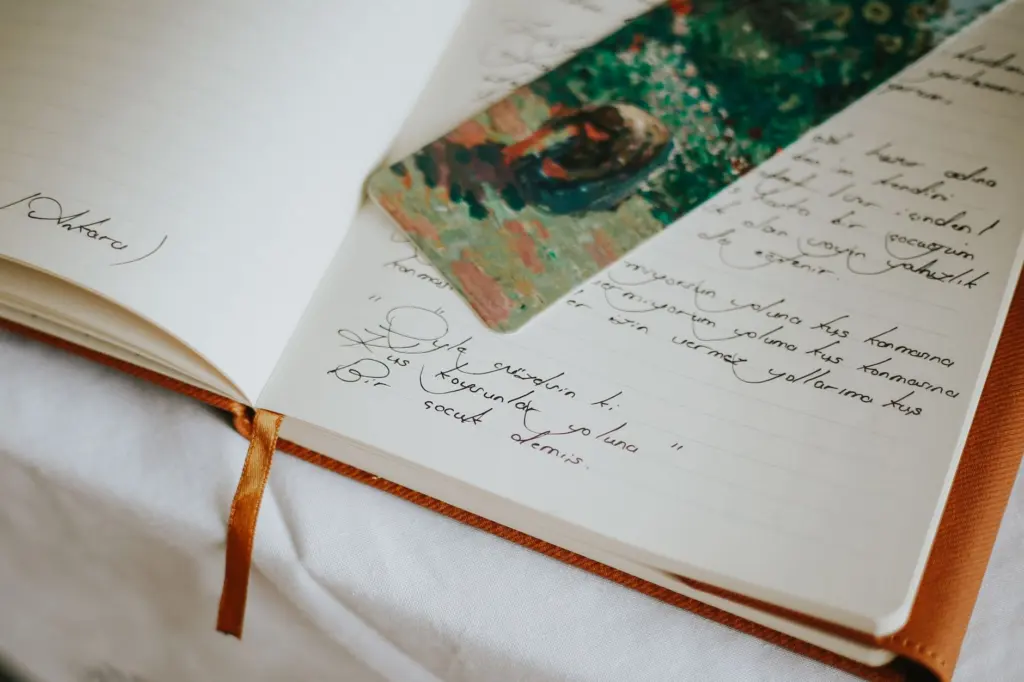
Decoration is optional and comes after the core fields are filled. A pasted picture, a tucked-in card or a few pen sketches can mark a book’s mood and make the page pleasant to return to. Readers who want to sketch beside their notes can start with Learn To Draw: The Best Beginner Drawing Books And How To Start Today (2026 Guide).
Frequently asked questions
| Question | Answer |
|---|---|
| Can the journal copy a Goodreads-style yearly target? | Yes. Goodreads lets users set a target number of books to have read by the end of each year, and a journal can mirror that target on a goals page, as this journal guide notes. |
| How do I record exactly where a passage appears? | Use threading from the Bullet Journal book log: write the note, then the page, paragraph and line numbers, for example 267,2,1. It lets you zoom in as close as you like. |
| Do I need a bullet journal to use these ideas? | No. The book log is one method, and its chapter index, page target and quotation bullet can be borrowed in any notebook. The four-field entry from the template guide works in any format. |