Faced with a long list of famous female authors, choose an entry book per writer instead of a whole shelf: Pride and Prejudice for Austen, Mrs. Dalloway for Woolf, Beloved for Morrison, The Handmaid’s Tale for Atwood.
The advice below is editorial: each starting book is picked for accessibility and for how well it shows the writer’s range. For the general method of deciding which book to read first by an author, use the hub guide, then return here for the names.
Four assumptions that mislead new readers
Most hesitation about classic women writers comes from a few habits: judging by byline, by chronology, by hype or by a single title. Each one sends readers to the wrong first book. The table sets the assumption against what the record shows and what to do instead.
| Common assumption | What the record shows | Planning use |
|---|---|---|
| Austen’s fame began with her name on the title page. | None of the four novels published in her lifetime bore her name. She lived 1775-1817. | Choose by title and reputation rather than by byline. |
| A heavily rated book is just hype. | Pride and Prejudice holds a 4.30 average from 5,038,362 Goodreads ratings. That marks a reader favourite, though ratings measure popularity, not literary rank. | Use ratings to choose between one writer’s books, not to rank writers against each other. |
| Begin with a writer’s earliest book. | Morrison’s most famous works include The Bluest Eye (1970), Song of Solomon (1977) and Beloved (1987). | Chronology is optional. Beloved is the recommended start here, with The Bluest Eye as the earlier alternative. |
| Woolf is known for one book. | Her best-known works are Mrs. Dalloway (1925), To The Lighthouse (1927) and A Room of One’s Own (1929). | Start with Mrs. Dalloway, the earliest of the three, then move on to To The Lighthouse. |
Figures come from PBS NewsHour’s classroom feature on eight female authors and a Goodreads list of top books by female authors.
Classic pioneers and their best entry points
The classic pioneers suit readers who want social observation and moral argument before modern experiments with form. Each of these books can be read alone, and the order below runs from the lightest commitment to the longest.
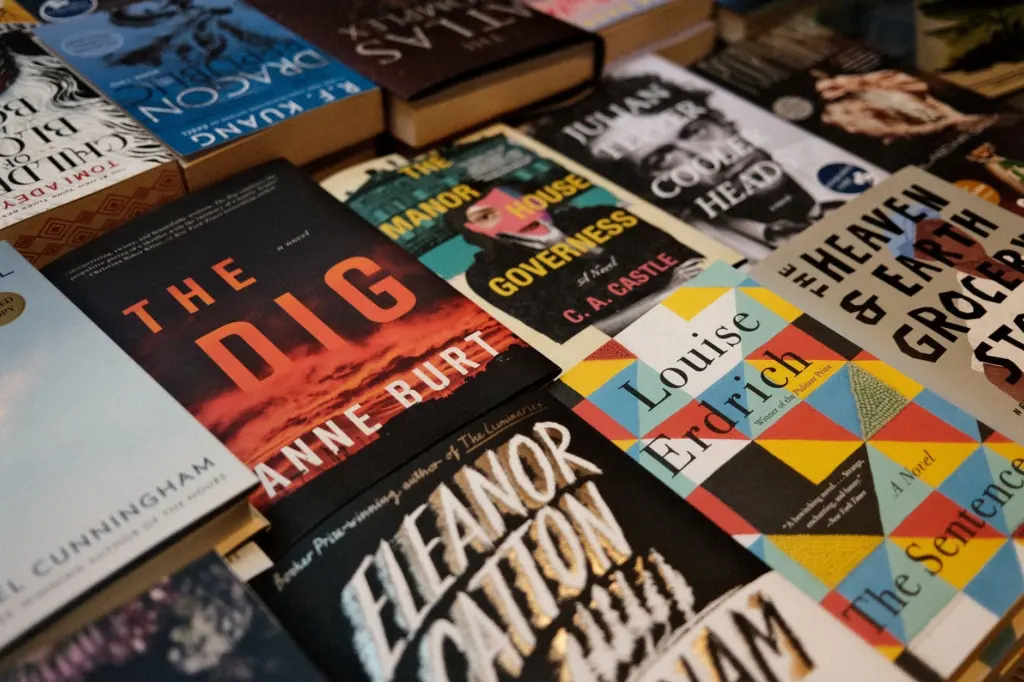
- Jane Austen: start with Pride and Prejudice (1813), a social comedy of marriage, class and irony. Emma (1815) and Sense and Sensibility (1811) are the natural next steps, according to PBS NewsHour.
- Louisa May Alcott: start with Little Women, which suits readers who want a family story with a gentle pace.
- Charlotte Brontë: start with Jane Eyre. It suits readers who enjoy Austen’s attention to class and marriage but want a more intense tone.
- Emily Brontë: start with Wuthering Heights, a stormier alternative once Jane Eyre has worked for you.
- Mary Shelley: start with Frankenstein, which joins Gothic mood to scientific ideas and asks ethical questions about creation.
- George Eliot (Mary Ann Evans): start with Middlemarch, a long psychological novel with a moral focus. Save it for when you want a slow, immersive read rather than a quick introduction.
Twentieth-century modernists and masters
Twentieth-century writers turn inward, towards memory, trauma and the politics of everyday life, and they move more freely between poetry, fiction and non-fiction. Pick the one whose subject draws you rather than reading in date order.
- Virginia Woolf (1882-1941): start with Mrs. Dalloway (1925). PBS describes her as one of the foremost modernists of the twentieth century.
- Zora Neale Hurston: start with Their Eyes Were Watching God, which records Black Southern life and folklore.
- Simone de Beauvoir: start with The Mandarins if you want fiction, or The Second Sex if you want her philosophical non-fiction.
- Sylvia Plath: start with The Bell Jar, her confessional novel, and then read the spare, intense poems of Ariel.
- Toni Morrison (born 1931): start with Beloved (1987), alongside The Bluest Eye (1970) and Song of Solomon (1977).
- Maya Angelou: start with I Know Why the Caged Bird Sings, a memoir that reads easily in a few sittings.
- Alice Walker: start with The Color Purple.
- Ursula K. Le Guin: start with The Left Hand of Darkness if you want science fiction with serious ideas.
- Agatha Christie: start with Murder on the Orient Express, a good choice when you want a plot-driven classic rather than a literary challenge.
- Margaret Atwood: start with The Handmaid’s Tale, published in 1985 and the book Owlcrate’s author guide calls her most popular. Her output as of February 2026 runs to 17 novels, 19 works of poetry, 8 children’s books and 12 works of non-fiction, so there is plenty to explore afterwards.
Global and contemporary voices
These writers carry the questions of voice, migration, memory and family into recent decades. Their entry books are chosen for clarity and momentum.
- Chimamanda Ngozi Adichie: start with Half of a Yellow Sun, clear fiction about identity and conflict.
- Elena Ferrante: start with My Brilliant Friend, an intimate story of friendship and politics.
- Sally Rooney: start with Normal People, which captures relational detail and social nuance.
- Clarice Lispector: start with The Hour of the Star, short lyrical, philosophical prose from Brazil.
- Arundhati Roy: start with The God of Small Things, which blends social critique with lyrical fiction.
- Isabel Allende: start with The House of the Spirits, a family saga with magical elements.
Emerging women writers and genre favourites
Emerging women writers are easiest to find in genre fiction, where series and screen adaptations build audiences quickly. Three names from Owlcrate’s author guide show where to begin:
- Marissa Meyer: start with Cinder, Book 1 of The Lunar Chronicles, published in January 2012.
- Leigh Bardugo: start with Shadow and Bone, the opening of the Grishaverse. Her books became the basis for the Netflix show of the same name, so you can compare page and screen.
- Emily McIntire: start with the first book of the Never After series. The series was completed as of 2024 with 6 books, so you can read it straight through.
Beyond these names, award shortlists, independent presses, literary magazines and librarian recommendations all surface newer writers. Translations broaden the field beyond English-language publishing. If you lean towards fast plots over literary fiction, If You Love Dan Brown: 8 Authors Who Deliver Codes, Conspiracy, and Rapid-Fire Thrills (2026 Guide) is a natural crossover.
Building a reading order
A balanced sequence is more useful than working through names alphabetically. These steps keep the list manageable:
- Pick a classic, a twentieth-century book and a contemporary title, so you can see how style and theme change.
- Sample a short story, essay or excerpt from a writer before committing to a long novel.
- Alternate older and newer books, and pair a novel with an author’s essays or poems to see a different mode of argument.
- Ask a librarian or independent bookseller for books with similar themes when you finish one you like.
Readers interested in how belief shapes writing can continue with Famous Christian Authors: 10 Writers Who Shaped Faith, Culture, and Literature (2026 Guide).
Frequently asked questions
| Question | Answer |
|---|---|
| Who are the most famous female authors? | Jane Austen (1775-1817) and Virginia Woolf (1882-1941) appear together in a college library guide to women authors. Toni Morrison and Margaret Atwood are the leading later twentieth-century names. |
| How many novels did Jane Austen write? | Six, two of them published after her death, according to PBS NewsHour. |
| Has The Handmaid’s Tale been adapted for screen? | Yes. After its 1985 publication it became a movie in 1990, and a six-season television series ran from 2017 until it concluded in 2025, per Owlcrate. |
| What did Toni Morrison win? | A Nobel Prize: PBS notes she was the first African American woman to win one. |