
Wondering how long your next novel will take? Average reading speed pages work out to roughly one page per minute in most paperbacks, based on about 200-300 wpm, but technical material runs slower.
Your own pace depends on the book, the page layout and how carefully you read, so treat every figure below as a planning range rather than a promise. If you want the wider habit rather than the arithmetic, start with how to read more books, then come back here to turn words per minute into pages and hours.
Converting words per minute into pages
Reading speed is measured in words per minute, while books are counted in pages, so the conversion needs one extra number: how many words sit on a page. The HMD Publishing reading-time calculator assumes about 250 words per page for a standard paperback, and that is a sensible default for novels and similar trade books. Dense or small-print pages hold more words, so a page-based estimate built on the paperback figure will run optimistic for them.
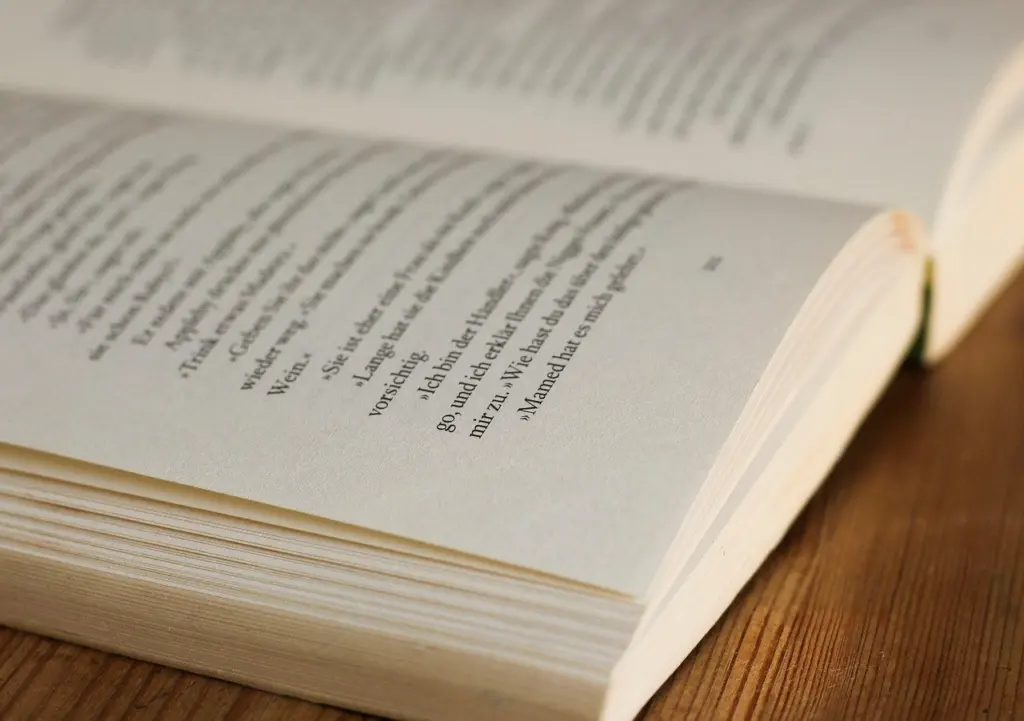
The method is straightforward. Divide your words per minute by the words on a page and you have the pages you cover each minute; stretch that over a longer session to get pages per hour. Going the other way, reading time is the total word count divided by your words per minute. Headway’s version for pages is: reading time in minutes equals pages multiplied by words per page, divided by words per minute.
Two reference points from the HMD calculator show the scale. At the average baseline of 250 wpm, 1,000 words takes about 4 minutes. A 300-page book at 250 words per page contains approximately 75,000 words. Use one words-per-page value consistently when you compare books or sessions, otherwise changes in layout will masquerade as changes in your speed.
Pace benchmarks side by side
A normal reading speed is a band, not a single figure, and the band moves with the material. The table contrasts the common baselines with the page-based estimates for non-technical and technical reading.
| Reader or material | Typical pace | Planning use |
|---|---|---|
| Slow baseline | 150 wpm | Cautious estimate for an unfamiliar genre or a tired evening |
| Average baseline | 250 wpm | Default for a book you expect to find easy to follow |
| Fast baseline | 400 wpm | Only for light, familiar material you read comfortably |
| College students | 250-300 wpm | Reasonable range for study reading of moderate difficulty |
| Speed readers | 400-700 wpm | Reported range for trained readers, not a starting assumption |
| Technical or complex material | 100-150 wpm | Use for dense, specialist or heavily argued text |
| Avid reader, non-technical text | 20-25 pages per hour | Upper planning figure for fiction and general nonfiction |
| Proficient reader, technical text | 10-15 pages per hour | Schedule study chapters by the hour, not by page count |
The words-per-minute baselines come from the HMD Publishing calculator, and the pages-per-hour figures come from Peech’s guide to reading speed by pages.
Pick the row that matches the book, not your self-image. If you are unsure, plan with the slower baseline and treat any time saved as a bonus; running out of time on a deadline read is worse than finishing early.
Common misunderstandings about normal reading speed
- “Normal is one number.” Published estimates cluster but do not match. One summary puts the average adult at 200-300 wpm, while a reading-training vendor gives 200 to 250 wpm for non-technical material. High school students are reported to average 250-350 WPM. Quote a range for yourself, and expect your result to move with the text.
- “A page is a page.” The same page count can hide very different workloads. The vendor figure for technical material is 50 to 75 wpm, lower than the 100-150 WPM the HMD calculator gives for technical or complex text. Both are far below the non-technical range, so the safe conclusion is that technical reading is much slower, and the exact figure depends on the source and the text.
- “Pages per hour is the measure of a good reader.” Pages are a planning unit, not a score. Page-count targets suit scheduling a commute or a reading challenge; they say little about whether you absorbed anything, which is the subject of the speed reading section below.
Book format, genre and difficulty
Format changes pages per hour in two ways: how many words each page holds, and how hard those words are to process. Simpler prose reads faster, while denser or more technical writing takes longer, according to the HMD calculator. For technical or complex material the same source puts speeds at 100-150 WPM.
Novels and general nonfiction
Fiction and narrative nonfiction usually sit closest to the paperback assumption, so the one-page-per-minute rule of thumb is most useful here. An avid reader on non-technical material might cover 20-25 pages per hour, according to Peech, which is a better target for a long session than a fast-baseline calculation.
Textbooks and technical reading
Peech suggests a proficient reader covers about 10-15 pages per hour of technical material. If a chapter is long, plan it in hourly blocks and expect the pace to drop further when you stop to work through a diagram or definition. A textbook chapter and a novel chapter of the same length are not the same amount of reading time.
Speed reading and comprehension
Speed reading can hurt comprehension when speed becomes the goal. Peech notes that rapid reading can lead to poor comprehension unless strategies are employed, and one reading-speed write-up states plainly that comprehension is more important than speed. Reading comprehension is the point of the exercise; a fast pass you cannot recall has not saved any time.
There is a supported way to speed up safely. Peech says reducing subvocalization, the habit of silently voicing each word, helps increase speed without harming comprehension. That is a habit to work on gradually rather than a trick to apply to a difficult chapter.
A practical check is to stop after a section and say what it argued. If you cannot, slow down and read that part again at your normal pace. For methods that make the material stick after you finish, see how to remember what you read.
Measuring your own pace
Your own numbers beat any benchmark, and they take only a short session to collect. Follow these steps with the kind of book you actually plan to read:
- Count a typical page. Choose an ordinary page, not a chapter opening, and count its words to get your words-per-page value.
- Time a normal session. Set a timer, read as you usually would and note the pages completed.
- Work out your rate. Multiply pages by words per page, then divide by the minutes you read to get words per minute.
- Repeat on other material. Test a novel, a nonfiction title and anything technical separately, because the results will differ.
- Record the results. A The Ultimate Reading Tracker Printable: Organize Your Books And Boost Reading Habits In 2026 gives you a place to log pace by book type so your estimates improve over time.
Once you have a personal figure for each kind of book, the formula above turns it into a reliable time estimate for any title you pick up.
Frequently asked questions
| Question | Answer |
|---|---|
| How long does a typical novel take to read? | The HMD calculator lists a novel at 50,000-100,000 words, which it puts at 3-7 hours. |
| How long do 50 pages take at 200 wpm? | Headway gives 12,500-15,000 words for 50 pages, or 63-75 minutes at 200 wpm. |
| Can practice raise my reading speed? | Most people can increase speed 25-50% with practice, according to the HMD calculator. Keep checking your recall as the pace rises. |